// Comparison page · Updated 27.05.2026 · In-depth comparison
A direct comparison of GlorySmile Twist and Lick (sometimes written "glory smile") for dogs with the eight most common alternatives: dental chews, brushing, water additives, dental sprays, dental wipes, dental diets, raw bones, and vet cleanings. Each comparison ends with a one-sentence verdict so you can skip the noise. Statistics cite the AVMA, AAHA, VOHC and peer-reviewed dental literature.
// THIS PAGE'S BASELINE
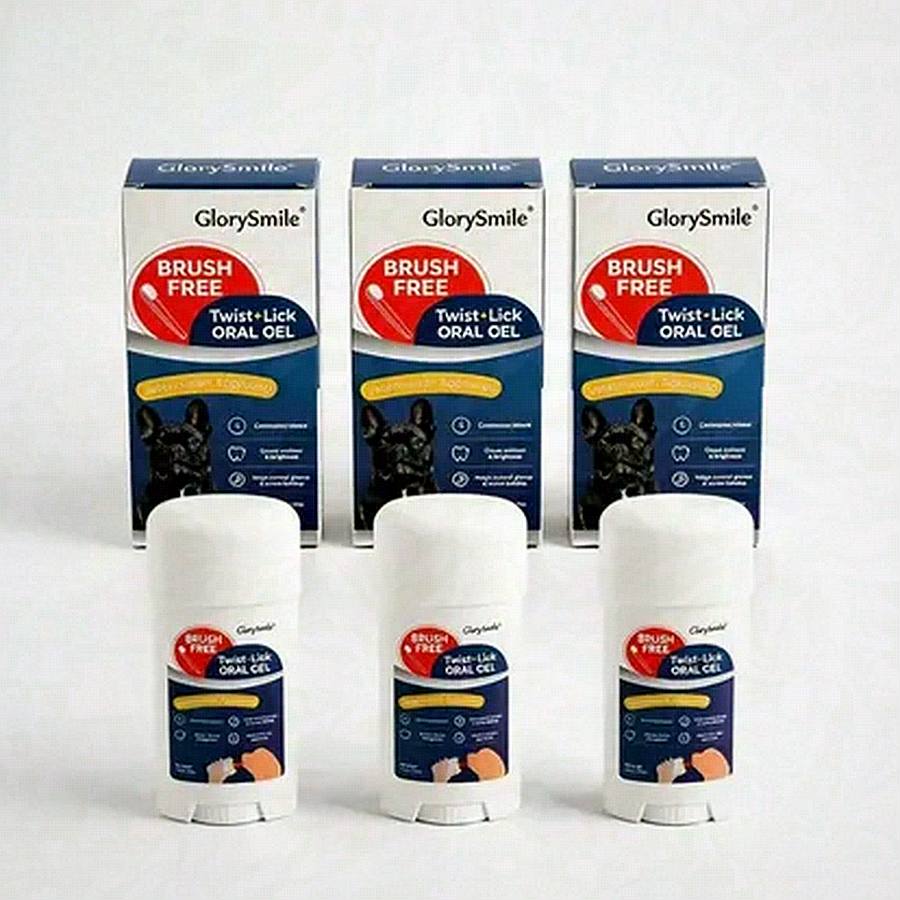
A lickable dental stick — a "lick stick" your dog licks clean. The Twist and Lick oral gel twists up like a glue stick, with active chlorhexidine + glucose oxidase + sodium bicarbonate + ActiFresh bio-adhesive. 10-second daily routine, 24-hour gumline dwell time.
// EIGHT ALTERNATIVES
Chews. Brushing. Water additives. Sprays. Wipes. Dental diets. Raw bones. Vet cleanings. Each compared on cooperation, mechanism, dwell time, dose control, daily time, calorie load, and per-day cost.
10s
Routine time
24h
Gumline dwell
$0.67
Per day, 3-pack
60d
Refund window
“Twist and Lick vs dental chews” is the search behind the search. The real question is bigger: what should you actually do, every day, to keep a dog's teeth healthy — given that nearly four out of five dogs have some stage of periodontal disease by age three, according to the AVMA?
The eight alternatives below all exist for a reason. Each one wins in a specific situation. The point of this page is to show you which situation matches your dog, and where Twist and Lick fits in among them.
Plaque forms on a dog's teeth within hours of eating. It's a sticky biofilm of bacteria, saliva proteins and food debris. Within 24 to 72 hours, salivary minerals begin calcifying that soft plaque into hardened tartar (calculus) — which can no longer be removed by brushing, chewing or licking. Only mechanical scaling, performed under anaesthesia by a vet, removes calcified tartar.
Critically, subgingival plaque — the plaque below the gumline — is where periodontal disease actually starts. It begins forming within the same 24-hour window. Surface chewing, abrasive treats and the action of a toothbrush all clean above the gumline; the bacteria driving disease live below it, and only an active chemical agent can disrupt them.
That is the entire reason daily topical antimicrobial products exist. A weekly chew misses the calcification window. A vet cleaning resets the surface but does nothing about what reforms in the next 24 hours. A daily product that bonds to the gumline and keeps an antimicrobial in contact with the tissue for hours is the only routine that addresses the biology in real time.
2–6h
Plaque starts forming
24–72h
Plaque calcifies to tartar
12h+
Chlorhexidine dwell at gumline
// Active 01 · Chlorhexidine
Chlorhexidine digluconate at 0.12% to 0.2% has been the standard antimicrobial in veterinary dental rinses, gels and pre-surgical prophylaxis since the 1970s. It's a cationic molecule that binds to negatively-charged bacterial cell walls, killing oral pathogens at bactericidal concentrations. What makes it interesting in a daily product is substantivity: it adsorbs onto enamel and oral tissue and slowly releases for up to 12 hours after a single application. That dwell time is what no chew, spray or water additive can match.
// Active 02 · Vet involvement
The product is recommended by three veterinary consultants at PetDogCentral — including Dr. Sienna Rose, DVM and Dr. Victoria Whitefield, DVM — who appear on the company's pages with name, title and a stated recommendation. Vet endorsement isn't a substitute for clinical trials, but named, credentialed veterinarians staking their reputation on a recommendation is meaningful, and it's also accountable in a way that anonymous endorsements aren't.
Per-package cost is the wrong unit. What matters is what each routine costs over the lifetime it's actually maintained. Below: estimated five-year out-of-pocket cost for a 35-pound dog, assuming the product is maintained daily where applicable.
Numbers are illustrative. Actual costs depend on dog size, geography, and whether anaesthesia complications push a cleaning into a multi-thousand-dollar event. The point isn't the precise number — it's that the comparison is never daily product vs nothing. It's daily product vs the cost (and risk) of the next clinical event.
If your dog refuses brushing, gulps dental chews, or has stubborn breath, a daily lickable formula is the routine you'll actually keep doing.
Senior dogs — especially those with heart conditions or anaesthesia risks — benefit most from a daily formula that postpones the day a cleaning becomes necessary.
Frenchies, pugs, bulldogs and boxers carry elevated anaesthesia risk. Crowded teeth also collect plaque that no chew toy can reach. A bio-adhesive antimicrobial is the right tool.
A dog that tolerates daily brushing with proper technique is rare. If you have one, brushing remains the standard. Use Twist and Lick alongside, not instead.
Dogs that chew slowly and enjoy texture will get something out of a VOHC-sealed chew or dental kibble. Just don't expect mechanical scrubbing to do what an active formula does.
None of the options on this page replace a vet visit for an active dental problem. Anything home-based is daily support, not treatment. Pain, bleeding, swelling, loose teeth or trouble eating need a clinician.
For most dogs, yes. The common thread across reviews and complaints is the same: the dogs that lick the gel daily see the result, and the handful of disappointed owners usually expected it to scrape off tartar that was already hardened on the tooth — which no daily product can do. Used as intended, breath tends to improve inside two weeks and visible plaque changes show over four to eight weeks. If it doesn't work for your dog, the 60-day money-back guarantee covers a refund.
For most dogs, yes. Chews work only if the dog chews thoroughly and the texture spends enough time on each tooth. Twist and Lick uses chlorhexidine that bonds to the gumline and keeps working for hours. Different mechanism, different result. A dog that gulps gets the full benefit of the gel and almost none of the benefit of the chew.
Brushing is technically the standard if a dog tolerates it and the owner sustains the routine with correct technique. In practice, most dogs don't and most owners don't, and the routine that gets done beats the routine that doesn't. For the small minority of brushing-tolerant dogs, the right answer is to use both.
It slows new buildup but does not scrape off tartar that has already calcified to the enamel. Hard tartar needs mechanical scaling, performed at a vet visit under anaesthesia. Twist and Lick keeps new plaque from turning into the next layer of tartar.
Glycerol, water, mineral oil, soy lecithin, sorbitol, cellulose gum, sodium bicarbonate, chlorhexidine, glucose oxidase, chicken flavor. Five of those are the formulation matrix; chlorhexidine, glucose oxidase and sodium bicarbonate are the actives; chicken flavor is what makes the dog cooperate; the cellulose gum is the bio-adhesive matrix branded as ActiFresh.
Breath usually changes inside two weeks. Visible plaque and gumline changes take four to eight weeks of daily use. The 60-day guarantee covers the window in which a real result becomes obvious. Dogs with significant existing buildup may need the full sixty days.
Sprays are easier to apply on paper but lose most of their dose to saliva in under a minute. The same active ingredient in a spray and in a bio-adhesive gel will have wildly different real-world effect, because dwell time is what matters. A spray of chlorhexidine and a gel of chlorhexidine are not interchangeable.
Wipes can work for very small, very calm dogs with patient owners. They clean the surface the owner physically wipes, which depends on technique and the dog's tolerance for a finger in the mouth. For most owner-dog pairs, the cooperation problem is the same one that ends brushing. Twist and Lick removes that problem from the equation.
The VOHC seal requires two independent clinical trials showing at least a 20% reduction in plaque or tartar versus an untreated control. Buyers should verify current credentialing status on the official PetDogCentral page rather than relying on this article. The chemistry on which the formula is based is well established in the veterinary literature regardless of seal status.
A VOHC-sealed dental diet provides measurable surface benefit if the dog chews the kibble thoroughly. A dog that inhales food loses most of that benefit. Therapeutic dental diets often require a vet prescription and cost $20–$60 a month over standard food. A daily topical formula doesn't depend on chewing behaviour and doesn't restrict food choice.
The AVMA and the AAHA both advise against raw bones for dental purposes. Slab fractures of the upper carnassial tooth are a documented risk, and the contamination concern (Salmonella, E. coli) is real. The mechanical scrubbing is real too, but the cost-benefit math turns negative the first time a dog cracks a tooth. The replacement cost of a fractured carnassial often exceeds $1,500.
The 60-day money-back guarantee covers a refund if Twist and Lick isn't the right fit. The refund process is published on PetDogCentral. If a dog has an active dental emergency — pain, bleeding, loose teeth, swelling, trouble eating — no daily product is the right answer; that's a vet visit.
Across all eight comparisons, the deciding factor is the same: does the active ingredient actually stay in contact with the gumline long enough to do something?
Chews don't. Sprays don't. Additives don't. Wipes don't — not for long. Dental diets work only if the dog chews. Raw bones don't, and carry their own risks. Brushing does, if you can actually brush. Vet cleanings do, but at the cost of anaesthesia. Twist and Lick does because of the bio-adhesive matrix — which is why it keeps showing up as the answer for dogs that won't cooperate with anything else, and for owners who want a routine that gets done daily without protective gear.